








 AMZ Sales Booster

















 Avg. +47% organic sales
 HELP CENTER


- Introduction
- Why Mastering How to Find Products to Sell on Amazon Matters More Than Ever
- The Must-Know Stats and Insights for Nailing Amazon Product Research (And What They Mean for Your Launches)
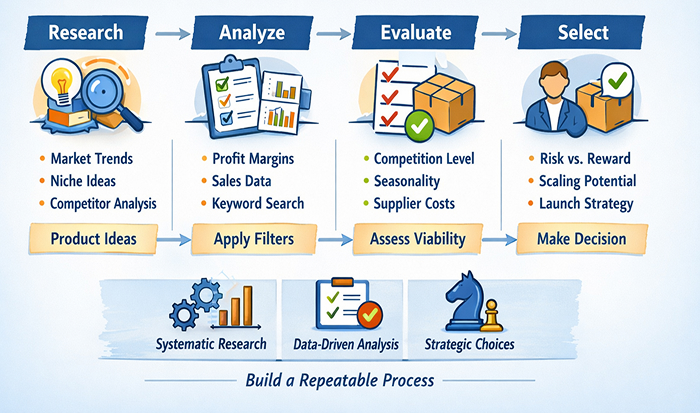
- How to Build Your Bulletproof Product Research System (Step-by-Step, Repeatable Weekly)
- Your Go-To Checklist for Amazon Seller Product Research (Laminated Worthy)
- Amazon Product Research Tools: Turbo Boosters (With Real Limits)
- Real-World Examples: Dud vs Stud (No More Guessing)
- Conclusion
- Frequently asked questions
Introduction

Listen up—how to find products to sell on Amazon isn’t some casual weekend project anymore; it’s the razor-sharp edge between grinding for pennies and building a business that runs itself.
Remember when you could toss up a random gadget, pray for sales, and maybe squeak by? Those days are gone. Fast-forward to 2026: Amazon’s a juggernaut with over 350 million Prime members across the country—from busy moms in Florida to tech bros in California—clicking “Buy Now” on impulse buys faster than you can refresh your Seller Central dashboard.
But here’s the kicker: Rising FBA fees, smarter algorithms (A10’s still shaking things up), and competition from every corner mean one bad product pick can sink months of work. Nail it, though, and you’re looking at steady revenue streams that let you call the shots.
If you’ve ever stared at a “sure thing” listing, placed that big inventory management order, and then watched sales flatline—or worse, almost pulled the trigger because it “felt right”—you know the stomach-drop feeling.
Product research is your firewall against that chaos. It’s where dreams meet data, saving you from dead stock horror stories and setting you up for launches that scale. In this Panda Boom deep dive, we’re not just tossing stats and tips—we’re building you a battle-tested system.
Whether you’re bootstrapping in Ohio or scaling from Colorado, this guide turns “maybe it’ll work” into “this is printing money.” No guru hype, just straight talk from someone who’s been in the trenches. Let’s unpack why this matters now more than ever and get you armed for the hunt.
Why Mastering How to Find Products to Sell on Amazon Matters More Than Ever
Real talk time: Amazon can hit you with that “I’m too late” vibe hard. You scroll Best Sellers, see the same kitchen tools or pet gadgets dominating, and think, “Everything’s saturated—who am I kidding?” But pull back the curtain, and saturation’s often a smokescreen.
The real killer? Tiny margins for error in a world where shipping costs climbed 38% for sellers last year (per big surveys like Jungle Scout’s), COGS ticked up 34%, and ad spends ballooned 32%.
Weak research doesn’t just slow your launch; it leaves you with warehouses full of losers, cashflow on life support, and that nagging dashboard refresh wondering where your money vanished.
Shift your mindset: Find products to sell on Amazon isn’t busywork—it’s your unfair advantage. Stats from seller reports show 80-90% of new FBA folks tap out in year one, mostly from crap picks that couldn’t handle real-world pressures.
Flip the script: Pick resilient winners—lightweight shippers, differentiable gems, evergreen demand from everyday Americans—and you’re not surviving; you’re thriving. Panda Boom shines here post-research, optimizing listings and PPC to rocket your rankings, but it all starts with the right product.
It’s proof over hope: Demand from real US shoppers, comp you can crack, margins that shrug off fees. In 2026, with AI integration speeding up everyone else, your edge is systems like this. No more “vibes-based” selling—welcome to data-driven domination. Buckle up; the stats and steps ahead will change your game.
The Must-Know Stats and Insights for Nailing Amazon Product Research (And What They Mean for Your Launches)
Data’s your secret weapon—cold, hard numbers from seller surveys and trends that cut through the noise. These aren’t random facts; they’re your launch litmus test.
Massive Seller Surveys (Nearly 1,500 Businesses) Reveal the 2026 Battlefield
Jungle Scout’s 2025 State of the Seller report—surveying almost 1,500 Amazon businesses in early ’25—ain’t guru gossip; it’s a massive snapshot of what’s crushing or crippling real operations. Solid sample size means you can bank on it like weather in winter.
Key takeaway for how to find products to sell on Amazon:
Treat it as your opportunity map. Costs squeezing everyone? Prioritize resilient niches for amazon. Sourcing flipping? Vet suppliers day one. Your pick isn’t isolated—it’s tied to logistics, ads, cashflow. Smart sellers use this to dodge common traps.
Cost Crunches Hitting Hard
38% Shipping Pain, 34% COGS Squeeze, 32% Ad Wars:
Top headaches from those reports: 38% flag shipping hikes, 34% COGS creep, 32% PPC inflation. These quietly torpedo “great on paper” ideas. Bulky pet beds? Shipping nukes margins. Generic widgets? Supplier hikes force price cuts. Ad-dependent niches? Breakeven stretches forever.
Actionable shift: Hunt compact/light products (shipping-proof), unique twists (COGS buffer), organic SEO boost potential (ad-light launches). Like avoiding a daily bar brawl—build products with breathing room.
Sourcing Shake-Up
China Reliance Down, US Sourcing Nearly Doubled
Fewer eggs in the China basket, domestic up 2x. Not “China’s dead,” but risk-smart pivots for speed/stability.
For Amazon FBA product research: Bake sourcing risk into step one. Fragile packaging? Compliance headaches? Pass. Newbies thrive on “stable boring” over “flashy chaos.” Higher unit costs sometimes beat delays.
AI Adoption
at 50%, Marketing Experiments at 54%—Competition’s Evolving Fast:
Nearly half used AI in ’24 for listings/reviews/keywords; 54% tested fresh tactics. Everyone’s faster, not always smarter.
Edge: Fundamentals like fit/story/value. Pick story-friendly, photo-popping, bundle-ready good products to sell. AI spits ideas; you craft winners.
How to Build Your Bulletproof Product Research System (Step-by-Step, Repeatable Weekly)
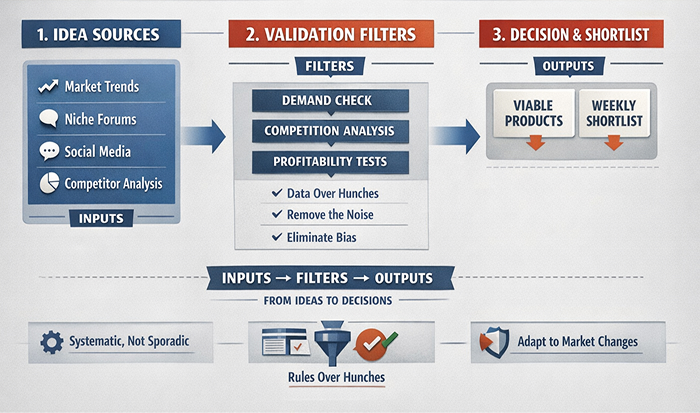
No system? You’re flying blind on moods and memes. Here’s your framework—run it like clockwork.
Step 1: Lock in Cost-Resilient Rules Before Ideas Flow
Filter survival first: Compact/lightweight (38% shipping), defensible edge (34% COGS), multi-lever marketing (32% ads). No “cheap thrill” traps.
Step 2: Demand Via Multi-Signals (Ditch Single-Shot Hype)
Page-one scan: Spread sales? Steady prices? Review momentum? Tools turbo this—avoid one-ASIN excitement.
Step 3: Competition as Battlefield Structure
Ad-saturated? Budget big launches. Review fortresses? Niche/improve. Me-too tops? Price hell. Target “messy demand”—buzz without brilliance.
Step 4: Mine Reviews for Gold
(Patterns = Profit Angles)
Complaints = fixes; loves = highlights; gaps = bundles.
Humanize: Solve real pains from US voices.
Step 5: Early Sourcing Reality Check
Quality consistency? Transit-proof? Reorder speed? Dream product flops without flow.
Your Go-To Checklist for Amazon Seller Product Research (Laminated Worthy)
Anti-tunnel-vision:
- Shipping survivor? (38%)
- COGS crusher? (34%)
- Ad agile? (32%)
- Creative marketing fit? (54%)
- Stands out vs AI clones? (50%)
Two “no’s”? Next.
Amazon Product Research Tools: Turbo Boosters (With Real Limits)
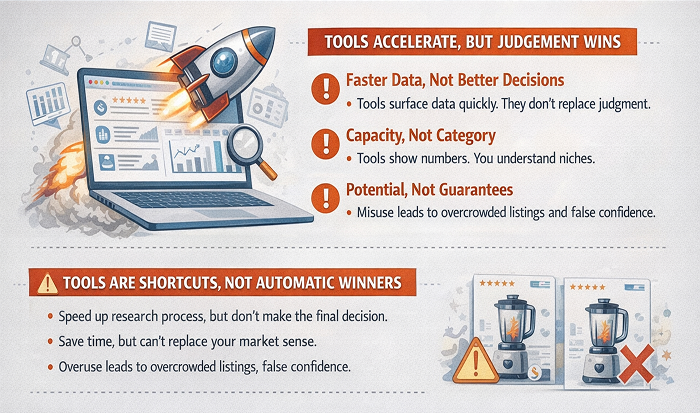
Tools = accelerator, not autopilot.
- Where They Crush
- Demand mapping, sales trends, niche velocity.
- Where They Fall Short
- Execution/profit (yours), differentiation (brainpower), assumption-proofing.
- Panda Boom post-pick: Listings/PPC mastery.
Real-World Examples: Dud vs Stud (No More Guessing)
- Bulky Kitchen Thing: Sells, but shipping/ads double-team doom.
- Compact Beauty Twist: Light, unique, levers everywhere—resilient rocket.
Conclusion
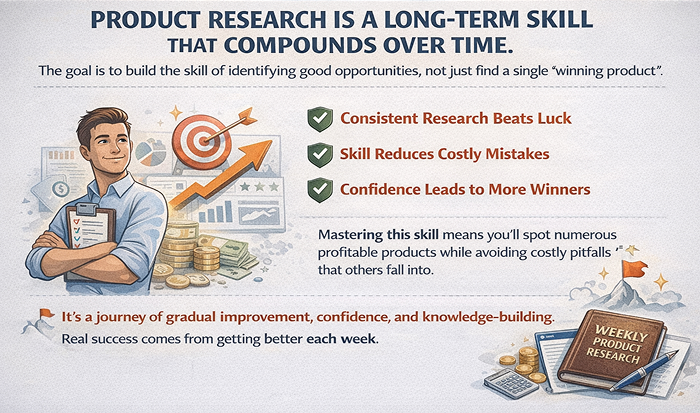
2026’s Amazon game ditches gut for data gears—from cost clamps (38/34/32%) to sourcing/AI/marketing shifts (2x US/50/54%). Panda Boom fuels launches; your system unearths best products to sell on Amazon: Small, standout, story-rich. Weekly checklist weeds weak, spotlights strong. Thrive, don’t just survive—your empire awaits.
Frequently asked questions
1. What's Amazon Product Research in Plain English, and Why Bother as a Beginner?
Amazon product research is simply finding profitable products with good demand and low competition to sell successfully.
2.Do I Really Need an Amazon Product Research Tool, or Is Free Stuff Enough?
You don’t always need a paid Amazon product research tool — free methods can work for beginners, but tools save time and provide more accurate data as you grow.
3. What's the #1 Mistake in Amazon FBA Product Research That Kills New Sellers?
The #1 mistake is choosing a product based on hype or personal interest instead of real data like demand, competition, and profit margins.
4.How Product Research Evolved from a Few Years Back—What Caught You Off Guard?
Product research has shifted from basic demand checks to competitive, data-driven strategies where branding and differentiation matter most.
5.If I'm Brand New, Which Stats Do I Prioritize First for Good Products to Sell Online?
Focus first on demand, competition, and profit margin—these three stats matter most when choosing a good product to sell online.


