








 AMZ Sales Booster

















 Avg. +47% organic sales
 HELP CENTER

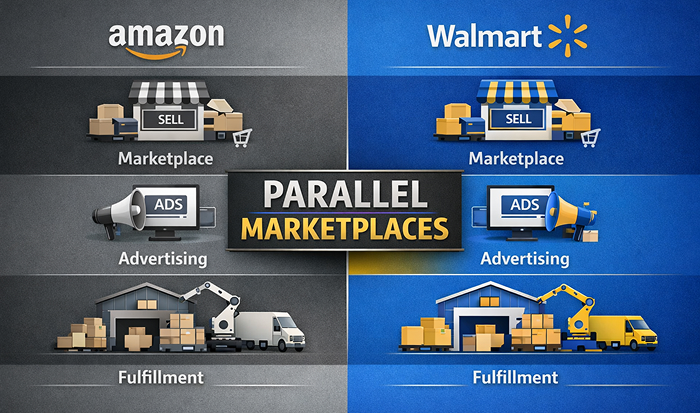

- The “Amazon-like” services Walmart offers (big picture)
- Fulfillment Services — Walmart’s closest match to Amazon FBA
- Multi-channel fulfillment: can Walmart do what Amazon does?
- Ads and visibility: Walmart’s alternative to Amazon advertising
- Membership perks: Walmart+ vs Prime (why sellers should care)
- Seller tools and support: Walmart’s ecosystem is catching up
- Returns and customer expectations (yes, it matters)
- So… should Amazon sellers expand to Walmart?
- Conclusion
- Frequently asked questions
The “Amazon-like” services Walmart offers (big picture)
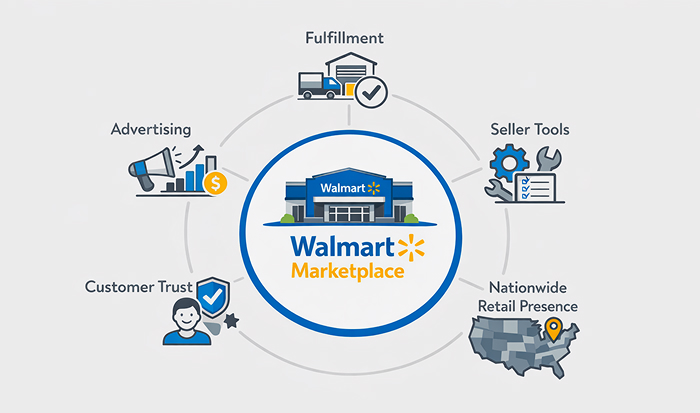
Before we go deep, let’s map the landscape. When sellers talk about Amazon, they usually mean five buckets:
- Fulfillment + shipping (Prime speed)
- Customer trust + membership program
- Ads that drive traffic and rank
- Seller tools and analytics
- Returns + customer service + operational infrastructure
Amazon and Walmart have serious answers in all five—just not always with the same names or the same workflow.
Here’s the quick match-up:
- Amazon fulfillment solution: Amazon FBA / Amazon FBA Services
- Walmart fulfillment solution: Walmart WFS (Walmart Fulfillment Services)
- Amazon membership: Prime
- Walmart membership: Walmart+
- Amazon ads: Sponsored Products/Brands/Display + DSP
- Walmart ads: Walmart Connect (Sponsored Search + on-site placements, expanding capabilities)
- Amazon seller system: Seller Central + Brand Registry tools
- Walmart seller system: Walmart Seller Center + growing dashboards/tools and partner ecosystem
Now let’s actually get practical.
Fulfillment Services — Walmart’s closest match to Amazon FBA
If Amazon has one “unfair advantage,” it’s that customers trust Prime delivery. And if sellers have one big shortcut on Amazon, it’s that Amazon FBA makes you look like you have a world-class shipping operation even if you’re packing orders in your garage.
So naturally, Walmart’s most important “Amazon-like” offering is Walmart WFS—because it solves the same pain: shipping at speed, at scale, without you running a warehouse.
What Amazon FBA actually does for sellers (beyond shipping)
Most people describe Amazon FBA like this: “Send inventory in, Amazon ships it.” True… but it’s bigger than that.
When you use Amazon FBA Services, you’re really buying:
- Prime eligibility (which can massively improve conversion in many categories)
- Operational outsourcing (pick/pack/ship)
- Returns handling (which you may love or hate, depending on category)
- Customer service coverage (again, depends on your product type)
- A ranking and Buy Box boost in many scenarios because fast shipping + reliability matter
The trade-off is cost and control. FBA is convenient, but you’re paying for the convenience—and the fee structure gets complicated fast. Plus, you’re operating in Amazon’s world: their labels, their inbound rules, their storage limits, their definition of “good” inventory health.
So the real question is: does Walmart offer the same “outsource logistics and win customer trust” package?
What Walmart WFS is (in plain terms)
Walmart WFS is Walmart’s version of “we’ll store your inventory and ship it to customers for you.” You send inventory to Walmart fulfillment centers, and Walmart handles the fulfillment side—storage, packing, shipping, and returns—so your listings can compete on delivery speed.
For a seller, the appeal is simple:
- You get the “Fulfilled by Walmart” trust signal
- You get faster shipping tags that improve conversion
- You get a more hands-off fulfillment workflow compared to self-fulfilling everything
In other words, Walmart WFS is Walmart’s most direct competitor to Amazon FBA Services.
Where Walmart WFS feels different from Amazon FBA Services
This is where sellers need a realistic mindset: yes, Walmart is strong, but it’s not Amazon—at least not yet. Here are the differences you’ll feel in day-to-day operations:
- Less “crowded” marketplace environment: Walmart generally has fewer sellers than Amazon, which can mean less brutal competition on some Amazon keywords and categories.
- Different customer expectations: Amazon shoppers are trained for endless selection and quick delivery. Walmart shoppers often skew more value-focused and practical, especially in staples and household categories.
- Different approval and compliance vibe: Walmart tends to be stricter about onboarding and category requirements, but once you’re in, the playing field can feel calmer.
If you’re a seller who’s tired of being the 47th identical garlic press on Amazon, the Walmart environment can feel like a breath of fresh air.
Multi-channel fulfillment: can Walmart do what Amazon does?
A lot of sellers aren’t just “Amazon sellers” anymore. They’re Amazon + Shopify + TikTok Shop + maybe a little eBay. So when we talk about Fulfillment Services, the real question is:
Can you use Walmart’s logistics the way you might use Amazon’s network?
With Amazon, many brands use FBA inventory (or dedicated 3PL stock) to fulfill beyond Amazon—especially when they want to centralize operations. Walmart has been moving in this direction too, expanding how sellers can use their fulfillment network.
For a growing brand, this matters because it can reduce your operational mess. Fewer warehouses. Fewer systems. Fewer shipping contracts. Fewer “where did we store that SKU” headaches.
If you’re trying to build a serious business (not just a side hustle), you eventually realize: logistics is the business.
Ads and visibility: Walmart’s alternative to Amazon advertising
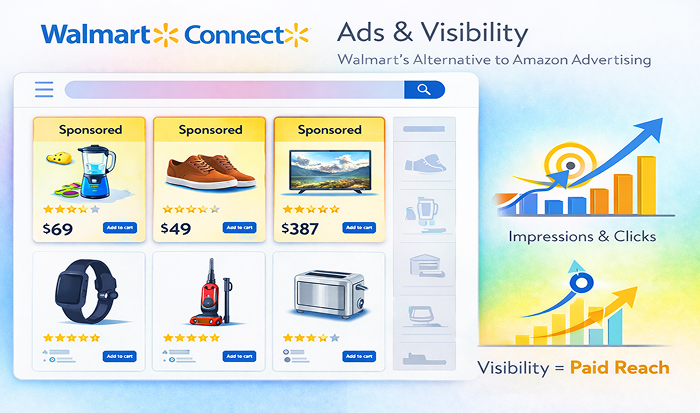
Let’s be blunt: organic is great, but paid traffic is the steering wheel.
On Amazon, many categories are basically “pay to play.” Even if you rank, competitors are advertising on your keywords. Even if your listing is strong, you can get drowned out.
Walmart knows this, which is why Walmart Connect exists.
Amazon advertising in one sentence
Amazon ads are powerful, mature, and competitive—great targeting and scale, but CPCs can be painful depending on category and season.
If you’ve run Amazon PPC for any amount of time, you already know the pattern: launches need ad spend, ranking needs ad spend, defense needs ad spend, and new competitors show up with reckless bids.
Walmart Connect: simpler, often cheaper, and still growing
Walmart’s ad platform is not as “feature-heavy” as Amazon’s in many areas, but that can be a weird advantage. It’s often simpler to manage, and in plenty of niches it’s less saturated, which can mean:
- Lower CPCs (because fewer sellers are aggressively bidding)
- Cleaner search results (less ad clutter)
- Faster wins for early movers who optimize listings + ads together
The smart play for many brands is not “Amazon or Walmart.” It’s: use Amazon for volume, use Walmart for incremental profitable scale—especially if you can get traction before your competitors take it seriously.
Membership perks: Walmart+ vs Prime (why sellers should care)
A lot of sellers ignore membership programs because they think, “That’s a customer thing.” It’s not. Membership programs shape buyer habits, which shapes your conversion rate, which shapes your sales velocity.
Amazon Prime trained customers to expect fast shipping and a smooth returns experience. Walmart+ is Walmart’s attempt to create its own loyalty loop—especially leveraging grocery, pickup, and delivery.
Prime drives conversion (and raises the bar)
Prime is a conversion machine. Customers trust it. They default to it. They browse inside it. Prime doesn’t just increase Amazon’s revenue—it increases the importance of speed and reliability for every seller on the platform.
So if you use Amazon FBA, you’re not just using a warehouse. You’re plugging into Prime expectations.
Walmart+ supports Walmart’s omnichannel advantage
Walmart+ leans into Walmart’s strength: stores everywhere, plus pickup/delivery infrastructure, plus everyday essentials.
For sellers, that matters because Walmart is building buyer loyalty in ways Amazon can’t always match (especially around grocery and local convenience).
Walmart’s ecosystem encourages repeat behavior, and repeat behavior is what turns a “one-time product” into a stable brand business.
Seller tools and support: Walmart’s ecosystem is catching up
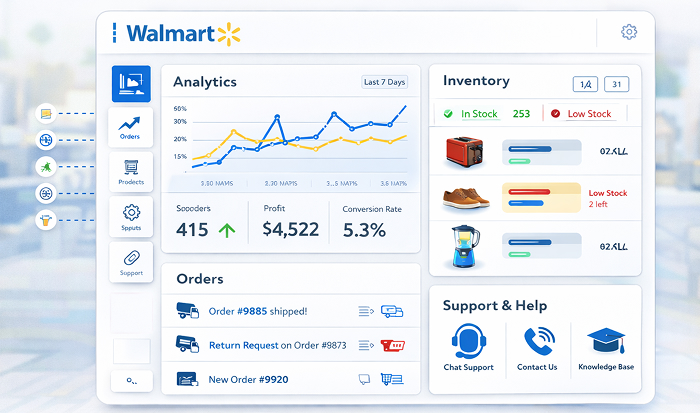
This section is where sellers often underestimate Walmart.
Amazon’s Seller Central can feel like a cockpit. Tons of buttons, lots of data, lots of policies. Powerful, but overwhelming.
Walmart has been building out Seller Center tools, dashboards, automation, and partner integrations to make selling smoother—and to reduce friction for sellers coming from Amazon.
What you’ll usually notice on Walmart is:
- The platform is improving fast
- There are fewer “legacy” systems and odd workflows than Amazon (because Walmart marketplace is newer)
- Policies can still feel strict, but the seller environment is less chaotic in some ways
If your goal is to sell on both platforms, treat Walmart as its own channel—not a copy of Amazon.
The sellers who win on Walmart typically respect Walmart’s rules, optimize for Walmart’s search behavior, and build listings that fit Walmart’s customer mindset (clear value, practical benefits, strong images, reliable pricing).
Returns and customer expectations (yes, it matters)
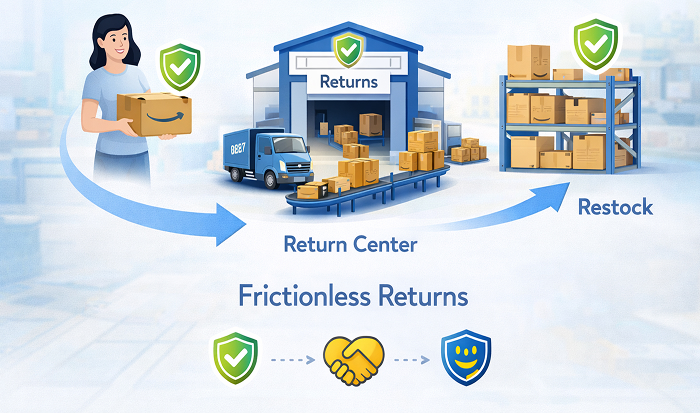
Returns can make or break profitability. On Amazon, returns are often frictionless for customers—which increases customer trust but can also increase return volume for certain categories.
Walmart also has strong customer-friendly policies, and if you’re using Walmart WFS, the returns experience is more standardized because Walmart is involved in the workflow.
The practical takeaway:
- If you sell product categories with high return rates (apparel, certain electronics, some home goods), build your margin model with returns in mind.
- If your product is prone to “free rental” behavior, invest in packaging, instructions, and listing clarity to reduce misunderstandings.
- Faster delivery boosts conversion, but poor product-market fit boosts returns. Don’t confuse “sales velocity” with “healthy sales velocity.”
So… should Amazon sellers expand to Walmart?
If you’re already succeeding with Amazon FBA, Walmart can be a smart second pillar—especially if:
- You want diversification away from Amazon risk
- You want another marketplace with less direct competition in many niches
- You can handle Walmart’s onboarding and compliance expectations
- You have operational discipline (inventory planning, clean listings, consistent pricing)
The biggest mistake I see is sellers bringing an “Amazon brain” to Walmart and expecting the same tricks to work the same way. Walmart rewards a slightly different approach: clear value, strong fundamentals, stable operations.
And if you’re new to e-commerce and trying to decide where to start, Amazon is still the most “plug-and-play” for many people, especially with the depth of third-party education available. But Walmart can be a strong early differentiator if you can get approved and build momentum.
Conclusion
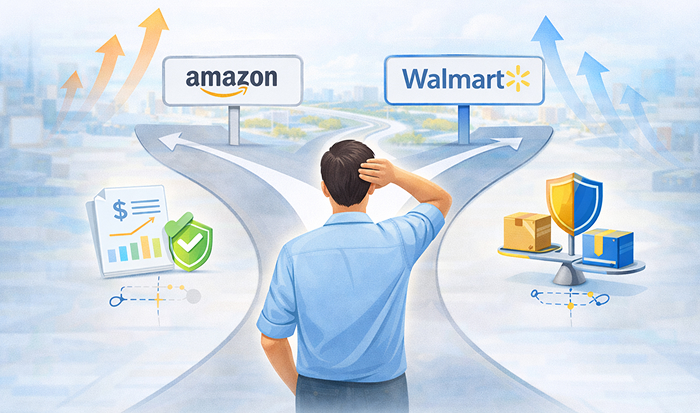
The honest answer to What Services Does Walmart Provide Similar to Amazon is: Walmart now offers a serious set of parallel services that cover the main things sellers rely on Amazon for—especially Fulfillment Services through Walmart WFS, plus a growing advertising ecosystem and a membership engine through Walmart+.
If your business is built on Amazon FBA (or you’re using Amazon FBA Services to keep operations lean), Walmart can be a strategic expansion that reduces platform risk and opens up incremental growth—often with a different customer mix and, in many cases, less intense seller competition.
The best move for most established Amazon sellers isn’t to abandon Amazon. It’s to build a two-platform foundation where Amazon drives volume and Walmart drives diversification and extra profitable scale—so your business isn’t one policy change away from panic mode.
Frequently asked questions
1.Is Walmart WFS basically the same as Amazon FBA?
They’re similar in concept (outsourced fulfillment), but the systems, requirements, and marketplace dynamics differ.
2. Can I run Fulfillment Services on both platforms at once?
Yes—many brands use Amazon FBA for Amazon orders and Walmart WFS for Walmart orders to diversify risk.
3. Do I need Amazon FBA Services if I’m already using a 3PL?
Not always; it depends on your margins, Prime conversion lift, and how well your 3PL matches delivery expectations.
4. Are Walmart Services good for private label brands?
Yes, especially if you have competitive pricing, strong listing content, and consistent in-stock performance.
5. Which is better for fast delivery: Amazon FBA or Walmart WFS?
Both can deliver fast; the “better” choice depends on your category, inventory placement, and customer demand patterns.


